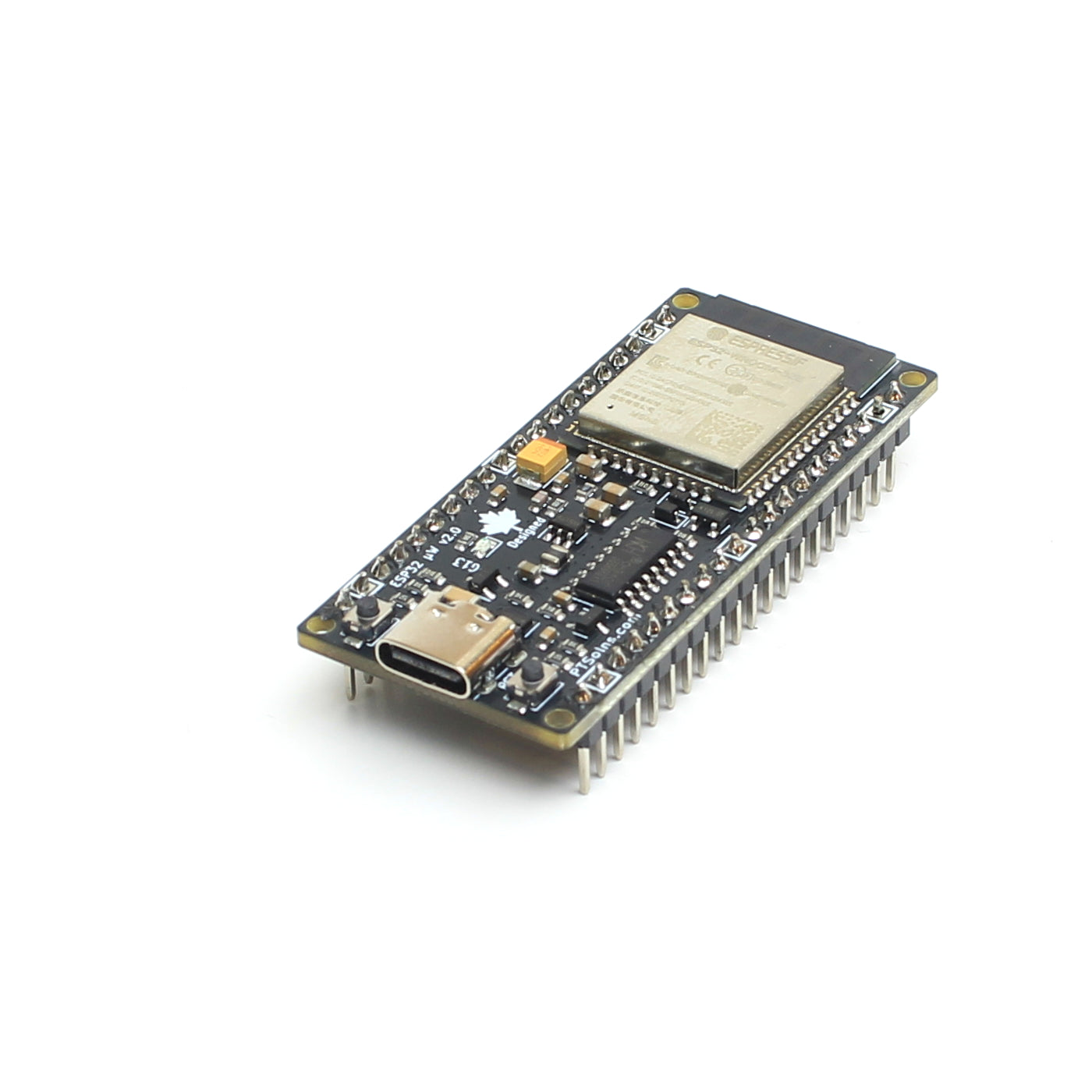


One of the most common questions asked by Arduino users is:
"How much current can the 3.3 V pin on an Arduino Nano supply?"
The answer isn't as straightforward as many people expect.
While the Arduino Nano is based on the ATmega328P microcontroller, the amount of current available from the 3.3 V pin is not determined by the microcontroller itself. Instead, it depends entirely on how the board designer implemented the 3.3 V power supply.
This article explains where the 3.3 V rail comes from, why different Nano compatible boards have different current ratings, and what this means for your projects.
The Arduino Nano 3.3V Pin
According to the official Arduino Nano documentation (page 8), the 3.3 V output is rated for a maximum of 50 mA.
Many users assume there is a dedicated voltage regulator generating this supply. However, that is not the case.
Instead, the classic Arduino Nano uses the FT232RL USB to UART interface IC. Although its primary purpose is to provide USB communication between the computer and the ATmega328P microcontroller, the FT232RL also contains a small internal 3.3 V regulator.
The Arduino Nano takes advantage of this built in regulator to power the 3.3 V output pin.
Because the regulator is only intended as an auxiliary feature of the FT232RL rather than the primary power supply, its available output current is limited.
Maximum 3.3 V current (Arduino Nano): 50 mA
For low power devices such as:
- I2C sensors
- Real Time Clocks (RTC)
- EEPROM modules
- Small OLED displays
this is usually sufficient.
However, larger loads such as wireless modules, multiple sensors, or small motors can quickly exceed this limit.
Why Different Nano Boards Have Different Current Ratings
One common misconception is that every Arduino Nano compatible board provides the same current on the 3.3 V pin.
In reality, this depends entirely on the board design.
The ATmega328P does not generate the 3.3 V supply. Instead, the board designer chooses how this voltage is produced.
Some boards use the USB interface chip.
Others include a dedicated low dropout (LDO) voltage regulator capable of supplying significantly more current.
The PTSolns Nano Flip
The PTSolns Nano Flip takes a different approach.
Instead of relying on the USB interface IC, the Nano Flip includes a dedicated XC6206P332 linear voltage regulator specifically designed to power the onboard 3.3 V rail.
While the XC6206P332 regulator itself is rated for up to 200 mA, the Nano Flip is intentionally derated to 160 mA to provide additional design margin and ensure reliable long term operation under varying conditions.
Maximum 3.3 V current (PTSolns Nano Flip): 160 mA
This additional current capacity makes it easier to power devices such as:
- Wireless modules
- Multiple I2C sensors
- Environmental monitoring systems
- Small embedded projects requiring higher 3.3 V current
without requiring an external regulator.
3.3V Pin Current vs GPIO Current
Another common source of confusion is the difference between the 3.3 V supply pin and the microcontroller GPIO pins.
These are completely separate specifications.
The 3.3 V pin provides power to external devices.
The GPIO pins are used for digital input and output.
The maximum recommended GPIO current is determined by the ATmega328P, regardless of which Nano board is used.
Changing from one Nano compatible board to another does not increase the current that an individual GPIO pin can safely source or sink.
Which One Do You Need?
If your project only powers a few low current sensors, the standard Arduino Nano's 50 mA 3.3 V output is generally adequate.
However, if your application requires additional 3.3 V current for wireless modules, multiple peripherals, or sensor rich projects, a board incorporating a dedicated voltage regulator can provide considerably more available power without requiring additional hardware.
Summary
Although many Arduino Nano compatible boards appear nearly identical, the implementation of the 3.3 V supply can vary significantly.
| Board | 3.3 V Source | Rated 3.3 V Output Current |
|---|---|---|
| Arduino Nano | FT232RL internal regulator | 50 mA |
| PTSolns Nano Flip | XC6206P332 dedicated LDO regulator | 160 mA |
Understanding this difference can help avoid unreliable operation caused by overloading the 3.3 V supply and allows you to select the most appropriate development board for your application.